
Last week Sarah Laitner, communities editor of the Financial Times, came to chat with us about engaging effectively with readers.
As the 125-year-old business continues its “digital first” strategy, Sarah’s is a role which will only become more important.
Here are some of the highlights from the discussion.
Rewarding commenters
Rewarding commenters for good behaviour is a great way to encourage thoughtful comments which actually add something to the story (rather than having comments fitting into certain stereotypes).
Sarah said that one of the most simple ways to reward good comments is to actually acknowledge them.
To this end, she encourages journalists to not only read but respond to comments on their articles, and credits commenters in articles when they point out errors which need correcting.
She also asks journalists to send her their favourite comments, the best of which get featured on the site’s front page, and even in the print edition.
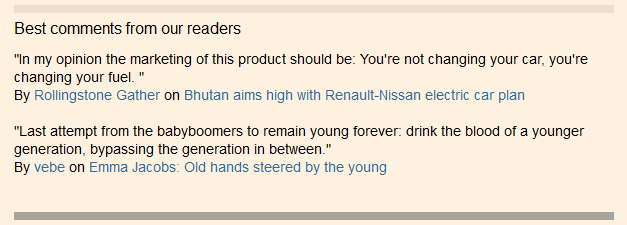
Though they’re quite far down the page and a little inconspicuous, the fact that they’re there is important.
Compare also, for example, the Daily Mail comment leaderboard, which simply lists comments with the most votes up or down by other users. An automated system like this can’t engage on the same level as the FT, where the best comments are all hand-picked by staff.
Sarah said that the chosen comments ideally work in isolation, so that people who haven’t read the piece yet can find them accessible.
But rewards can be more tangible than this. In October, to celebrate its Facebook page reaching one million “likes”, online subscriptions were given away to “fans who contribute the best and most interesting comments”.
We suggested that this kind of reward scheme could be done more regularly and, though the decision would have to go through the marketing department, Sarah said she’d like to look into it.
Using Social Media
“Social media is the fastest growing driver of traffic to our site, with Twitter sending the most,” Sarah told us.
They have 62 official accounts, including two main ones.
@FinancialTimes automatically tweets headlines, while @FT consists of tweets about “news stories, features and updates”, handcrafted by Sarah and her team.
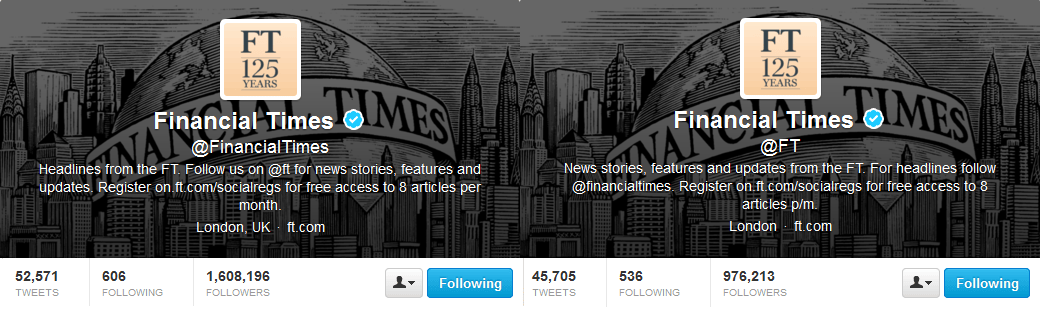
This huge presence on the site means that people can follow only the sections they want to and, in the case of the two main accounts, can choose the style of updates they prefer.
Sarah also said that the new gifting option for articles “makes our paywall site more social and brings new people to it”.
Asked about other good ways to attract people to a site, Sarah recommended having a regular interactive feature.
She pointed to the daily Markets Live chat, part of the FT’s free Alphaville blog, as an example of this working well.
Starting at 11am, market commentary is live-streamed and a thriving comment community always joins in.
Sarah managed to turn the questioning onto us before she left. When she asked what we’d like from the FT, Billy jumped straight in to demand comments be added to the tablet edition (by “demand”, of course, I mean “asked politely”).
She said that this is something already being worked on and that we should expect it in the near future.
Her final piece of advice?
“Keep an eye on Google+. Nearly 2.5 million people have us in their circles. People use it, so don’t ignore it. ”