

Unlike the past few years when Build the News focused on hacky concepts and newsroom tools, last weekend’s event went back to basics— telling a story.
University students, under the guidance of The Times’ journalists, coders, developers and data analysts, set out to build and tell their stories in the most effective ways possible.

Our City University team (above)’s story “Grub’s up: the future of food” story won, while Cardiff, with an investigative data piece on how government dictates citizens’ love life, was declared runner-up.

These are the lessons we learned from the two-day event at The Times’ News Building:
i. Story comes first: Before succumbing to the temptation of fancy tech and visualisations – what’s your story? What’s new and why does it matter?

Judges at the event (above) reminded participating student journalists to keep in mind the five Ws and one H questions while telling their stories. Who cares? Why? How?
Journalism, they emphasised, comes first. New technologies only enable us to do it better. Not the reverse.

Like other creative arts, build something first – a strong story – then use visualisations and other aesthetic devices to enhance reader experience. Don’t build a decoration— pointless, fancy visualisations.
For instance, in the winning project— Grub’s up: the future of food— we built a case as to why people should eat insects. Using data analysis and visualisations, we established that the world may not be able to feed the projected nine billion-plus mouths by 2050.

We also showed how insects are a viable source of protein and minerals because they emit less greenhouse gases compared to livestock, and are easy to farm.
ii. How you tell a story matters: It might be with text, video, audio or a chart, but just make sure the reader get the message easily.

As The Times News Editor Katie Gibbons advises in her post, “be innovative, but not for the sake of it — the simplest, cleanest way of getting your message to your audience is almost always the best”.
Thinking about the medium (print or online), nature of the story, demographic and psychological make-up of the target audience can help you arrive at the best way to tell it.

iii. Coding and DDJ are essential: Basic knowledge of coding and programming languages such as HTML, CSS, JavaScript, Python, R and Rubi, it became evident, may replace grammar interview tests for journalists in the near future.
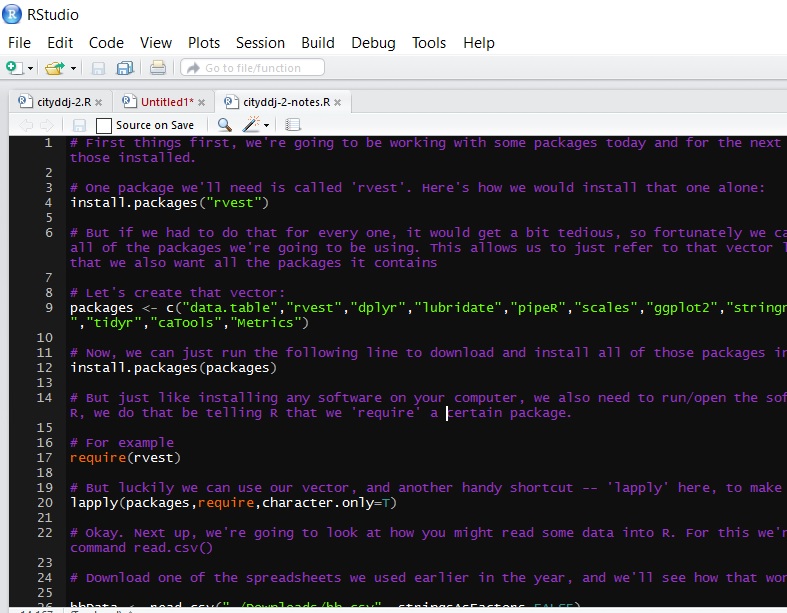
During the competition, The Times developers and coders were at hand to help teams because many lacked experienced techies.
The event laid bare the need for journalists to get the hang of web design, content management systems, data scraping and coding.

In the same vein, the need for journalists to learn how to generate stories hidden in data became an open secret for success. Going forward, we should be able to scrape, analyse, visualise, generate and tell data stories.
iv. Collaborate with coders: Build the News, once again, confirmed the need for writers without technical knowledge to collaborate with developers, coders and programmers in data projects.

But as we said earlier, there is every need to watch and learn what the techies do, because they may not be there for you all the time. Many media houses in fact don’t hire them, and the onus is on reporters and editors to write code.
v. Innovate, innovate and experiment: While video, text and photos remain the most preferred storytelling methods, experimenting with new forms of journalism is key to going into the future.
https://www.flickr.com/photos/mattietk/25955555016/in/album-72157665584926290/
Birmingham City students (above), whose project focused on The Investigatory Powers Bill (Snooper’s Charter), got a honourable mention at the event for their innovative use of bots and virtual reality.
Photos: Matt ‘TK’ Taylor

Harry from Nairobi is a Writer, Sub, Editor and Media Trainer. His interests are Data Journalism, Social and New Media. On FCO Chevening Scholarship at City, Harry has written for The Washington Post, the Mirror, and Kenya's Daily, Saturday and Sunday Nation.