
Set up by Tim Sabat, Chris Coyier and Alex Quez in 2012 as a coding playground for front end development, CodePen is a site that allows both beginners and experienced coders to try building for the web.

Many of the more experienced visitors use the platform to test out initial ideas before putting them into practice, but the beauty of it is that you don’t need to go there with anything in mind: even if you are completely new to coding, you can play around and learn the coding basics in a fun way. I asked Tim about what CodepPen allows users to do, the thinking behind it and whether being able to code is important if you want to be a successful data journalist.
What inspired you to set up CodePen?
CodePen originally began as a weekend project that grew over time. Chris approached me and Alex and because he felt the current tools in this space were stale and he wanted a place to host examples for his website css-tricks.com. When we launched it, strong traffic to the site convinced us that we were onto something and that this should become our full-time job.
Do you think being able to code is important for data journalists, even if it’s just at a basic level?
There is a perennial theme which suggests that “everyone should learn to code.” While coding may not directly affect a journalist’s job, it may introduce them to the finer points of design and may open up new avenues of thought. Considering that print media is contracting and that online media is on the rise, a journalist who understands the medium on which their ideas are shared could influence the way a piece is written or how the accompanying art is chosen. Publishing to the web is easier than ever and has an extraordinary reach, so being in control of the layout and look can help shape a reader’s opinions of a journalist’s work.
Nothing drives a point home like a chart or graph, and a knowledge of coding is an absolute must unless you want to depend on someone else to create your charts and graphs. Data visualization, when done right, compliments good writing. As we become a more data-driven society, being able to tease out relationships in data and use it to tell a story will help a writer drive home a strong point.
Can CodePen be used by people who have never done any coding before?
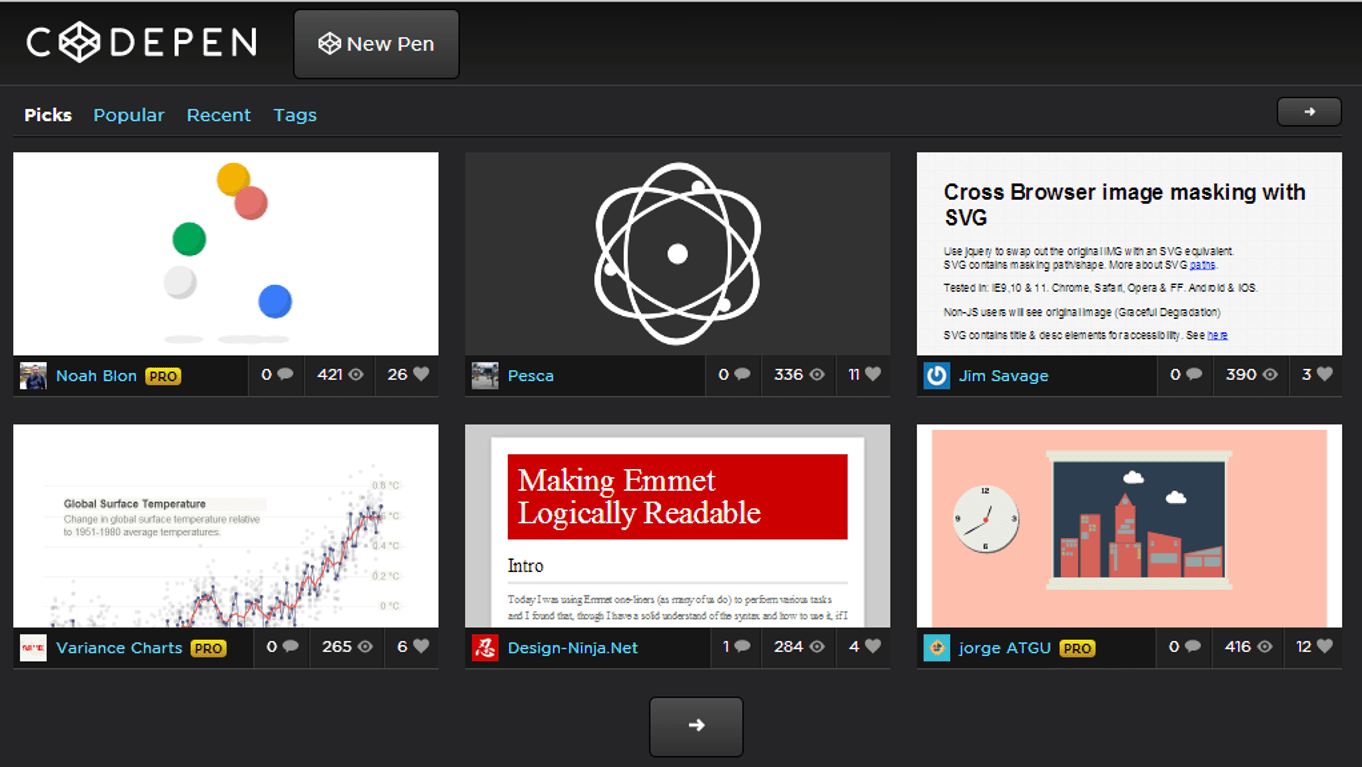
CodePen is great for first-time coders, since they can browse or search for examples and edit them in real time. It gives a new developer a jumping-off point for ideas and designs, and it also makes it logistically easier to start coding because you don’t have to install a web server, set up preprocessors or host a domain to edit or share work.
If you’re just starting to code, which is the best to learn as a data journalist: HTML, CSS or JavaScript?
There is no best option. The basics of HTML and CSS are easier to learn than JavaScript and would probably prove more useful in terms of influencing the look and feel of a piece published online. However, a knowledge of JavaScript would help when data needs to be displayed. Tools like HighCharts, Google Charts, and d3.js all require JavaScript skills to operate.
With regular practice, how long does it take to become good at coding?
The ten-thousand hours rule is thrown around when one discusses mastery of any skill and programming is no different. I feel that a committed student with the appropriate mentoring can become a contributing member of a development team within a year or less. Schools like HackBright Academy in the USA turn out developers in 12 weeks who are hired by companies like Apple, Google and Facebook. So, it depends on the person and the level of dedication.
What’s the best thing you’ve seen recently that was created using coding?
We are surrounded by amazing products and services created from coding. CodePen’s most-popular has some pretty amazing examples: http://codepen.io/2013/popular/.
If you had one piece of advice for someone considering learning to code, what would it be?
When learning to code, you have to be persistent, since the craft will frustrate you and it is easy to give up. Finding mentors or forums for your questions and problems can accelerate your learning, so seek those out.

Biology graduate from Oxford, currently studying Interactive Journalism and being re-wired for a digital age. http://sarahspickernell.com/