Growing up in South Florida, there weren’t many professional outlets available for aspiring journalists. If you lived in Broward or Palm Beach counties, your allegiance was to the Sun-Sentinel, and if you grew up in Miami-Dade, you “worked” for the Miami Herald.
My two years writing for the Sun-Sentinel as a teenager were some of the most professionally fulfilling of my life. My wonderful editor trusted me and gave me absolute freedom in terms of content, and I met some of the most fantastic writers, editors, and photographers in the world.
It’s with great pride that I read that the Sun-Sentinel won its very first Pulitzer Prize on Monday. For those who might not know, the Pulitzer is the highest and most prestigious award for journalism awarded in the United States, maybe even the entire world. It’s a thrilling moment for the Sentinel, I’m sure, but the reason I’m writing about it is this: they won for a data-driven story.
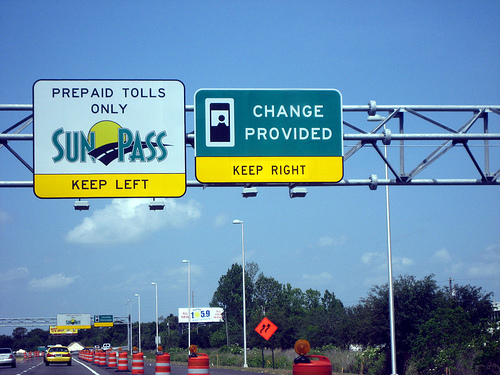
“Above the Law: Speeding Cops”, a series of three articles by investigate reporter Sally Kestin, database journalist John Maines, and investigate team editor John Dahlburg, examine the reckless driving of off-duty policemen. By examining data collected by Sun Pass, a Florida motorway “fast pass” designed to eliminate the need for toll booths, Kestin and Maines found that nearly 800 officers had reached speeds of 90-130 MPH, many of them while off-duty.
The speeding officers caused at least 320 crashes since 2004, killing or severely injuring 21 people.
“As a direct result of the Sun Sentinel’s investigation, scores of officers were disciplined, suspended and, in the case of the Miami officer whose speeding sparked the project, fired. Cities throughout South Florida instituted new ways of tracking their police activity as a result of the series. The database was so innovative that two law enforcement agencies sent investigators to the newsroom to learn how to replicate it,” the Sun-Sentinel said in an article on the Pulitzer win.
According to the article, the journalists analysed more than a million database records and drove 2,500 miles to gauge the speeds and distances involved.
The initial request for data was rejected, but toll records from 12 South Florida police departments were ultimately provided. “Even once we got the data — more than a million records — the technical challenges were daunting because the raw information does not allow speed calculations,” Maines said to the Sentinel. “We came up with some neat tricks to overcome that, and it’s great that the judges recognized our hard work.”
Perhaps, more than anything else, I’ve learned that good data journalism requires incredible patience. The time it must have taken to peruse a million records, even with the “neat tricks” Maines mentions, is staggering. As a proud alumna of the Sentinel’s teen programme and as a proud South Floridian (most of the time), I’m happy to say the Sentinel has produced data journalists to look up to.