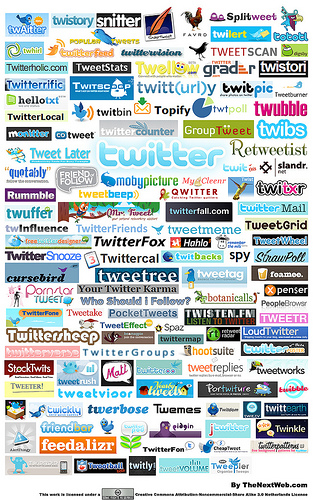
Everyone knows that signing up to a social network means joining a community of millions. Why then do we straight away demand that our privacy should be vigorously protected and our details shielded from the other members of the network we’ve just joined?
The function of social networks is changing. In the beginning, people rushed to sign up because they allowed easy communication with virtually anyone, anywhere. They were a means of exploring a brave new world of possibilities. Now, we eschew that brave new world and carefully pick and choose the people and issues we interact with.
These days it makes more sense to think of social networks as a series of small, connected communities rather than one large one. Facebook has gone from being the community to merely the host of other communities.
Looking through the yahoo directory of social media sites, the vast majority are not generic forums for universal interaction. Rather, they target and market themselves towards a specific type of person or around a specific issue, from dogs to country lifestyle to female travellers.
The internet is not a place to form indiscriminate new relationships, but somewhere existing relationships are refined. New interactions are pre meditated and rational.
Along what lines will this process of fragmentation and specialisation take place? Will we congregate around specific interests or geographical areas? Work or leisure? Frivolity or gravity?
Of course, these possibilities are not mutually exclusive. The beauty of social networking is that it allows us to be all things to all men, professional on twitter but casual on facebook.
I believe age will be a huge factor in the delineation of social networks in the coming years. Social networking is not simply about our relationships with people and issues, it’s also about our relationship with computers themselves. How we use and relate to technology is dictated by our age more than anything else.
Clubpenguin is social network designed specifically for young children (6-14). Leaving their multi coloured igloos, penguins explore a colourful and closely guarded online world, talking to one another on a highly censored chat (where saying “bum” can get you banned for a week) and playing mind enhancing games. In short, the highly protected environment teaches children the values of responsible online citizenship.
Clubpenguin is so successful because it is tailored to the online needs of a specific generation. There will be surely be many more on this model. The great opportunity is a social media platform targetted at pensioners. There are a lot of them, and they are increasingly computer literate. Besides, old people tend to have time on their hands and be quite immobile. Social media is ideally suited to their needs.

Full time banana enthusiast. Part time subversive