

Breaking news on Twitter is not something that’s new, but it is now being seemingly regulated by the powers-that-be at Sky News and the BBC News operations.
Sky News had an email leaked on Tuesday evening concerning Twitter, in which it stated, according to The Guardian,
“1. Don’t tweet when it’s someone else [sic] story. Stick to your own beat. 2. Always pass breaking news lines to the news desk before posting them on social media networks.”
The BBC then followed up on Wednesday, with this blog post by the BBC’s Chris Hamilton:
It says that [new social media guidelines], when they have some breaking news, an exclusive or any kind of urgent update on a story, they must get written copy into our newsroom system as quickly as possible, so that it can be seen and shared by everyone – both the news desks which deploy our staff and resources (like TV trucks) as well as television, radio and online production teams.
It does, in effect, relegate retweeting of sources and tweeting breaking news lines to second base, after teling the channel. Chris Hamilton did clarify the post with a comment on the Guardian story saying that they have not banned retweeting breaking news lines.
…to be clear, it isn’t telling BBC journalists not to break stories on Twitter. It’s about the best way of breaking news on all our platforms – social networks, our own website, TV, radio.
As quoted above and in my blog post, we’re fortunate in having access to technology that allows our journalists to get text into the BBC newsroom system and to our own Twitter accounts at the same time.
When the technology isn’t available, for whatever reason, we’re asking them to prioritise telling the newsroom before sending a tweet.
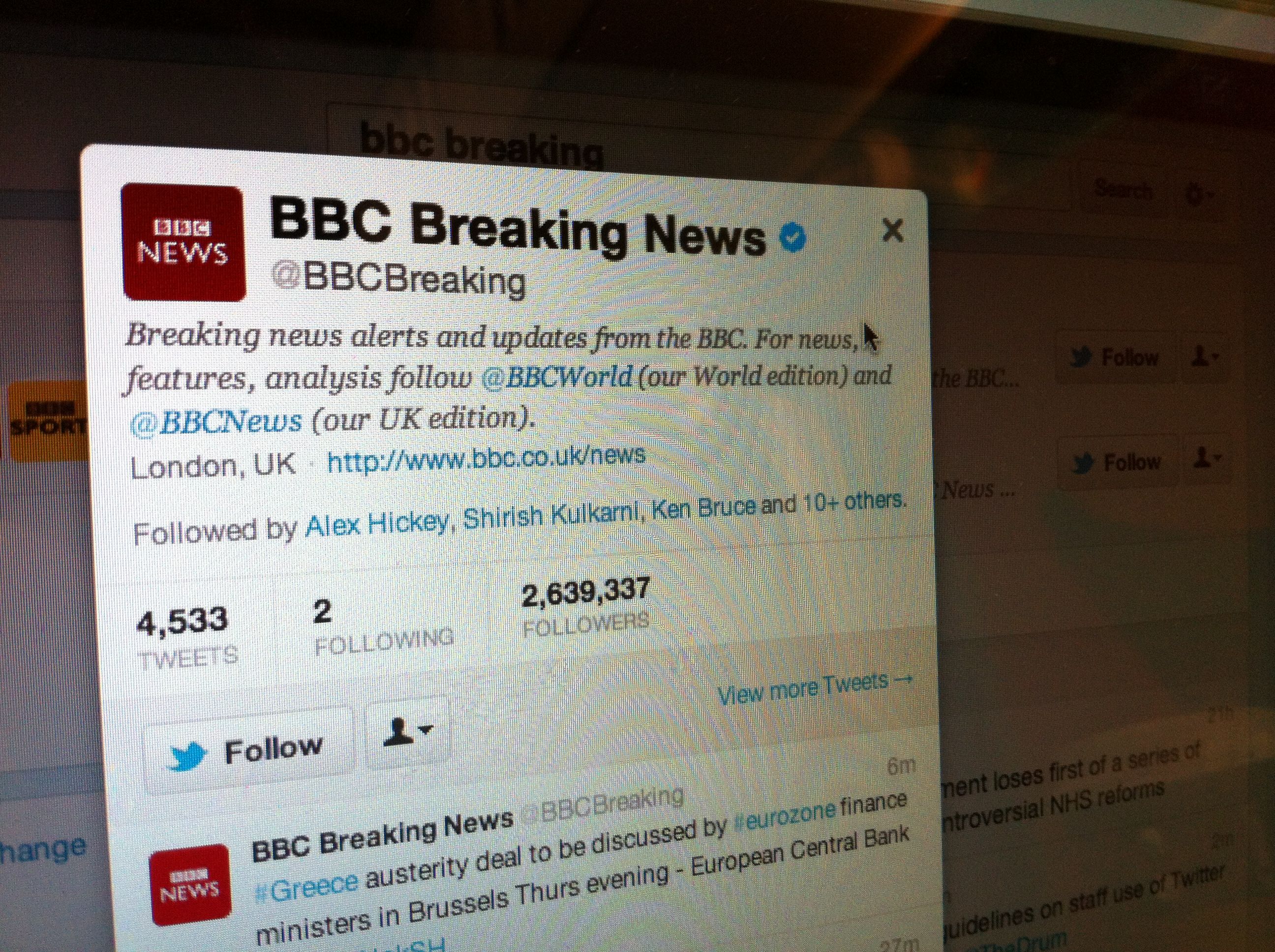 This isn’t the worst of situations. For anyone involved in running a broadcaster, on any level, they will know the technicalities of putting out news on any of the channels. The cameras need to be linked up, either through satellite or fibre optic cabling for the presenter to go live on TV, the studio needs to finish whatever they’re doing, and they may need to rejig things, write or clarify a cue or script, get some questions for the presenters who can most likely be clueless as to the next line in a story. If the reporter hasn’t actually got a camera or radio kit with him or her, they need to get to one. Many, many things need to happen, almost instantly, and in sync with each other. That is why the BBC method of getting the content into the newsroom using a system that tweets and tells reporters is good.
From the social media perspective, it means that the news may be a second or two slower to get to you. It will still get there, and the fact Twitter accounts are owned and branded means you still say which organisation broke the news, rather than which journalist. Jonathan Haynes at the Guardian explains it with an example featuring Peston. His stories can quite often break late at night, or the weekend. He’ll tweet his lines first:
The BBC’s Robert Peston (@Peston), meanwhile, often breaks stories on Twitter before he publishes them on his blog – and both can appear long before a major BBC news bulletin. Thanks to social media, the BBC “owns” Peston’s stories even if they get everywhere before News at Ten rolls around.
This looks like two opposing arguments. It is, essentially, because they both work. News organisations have limited resources and need to get them in the right places to get the correspondents and reporters on air. At the same time, Twitter accounts aren’t secret – they are branded and people know who’s who. The rules work, as long as people are sensible.
If reporters go about tweeting offensive, unverified, malicious, or material that can bring companies into disrepute, then they need to look at banning retweeting totally, and stringent rules. Luckily, reporters are sensible, so the current situation works.
This post was written by @andrewstuart. He is on Twitter, but doesn’t break news yet. He is, however, worth a follow, and you can rant at him there. He may even retweet you.