 Neha-Tamara Patel
The revolution of the tablet computer is making the media industry, especially newspapers, increasingly excited. The tablet offers the opportunity to transform the reading of print from paper to screen.
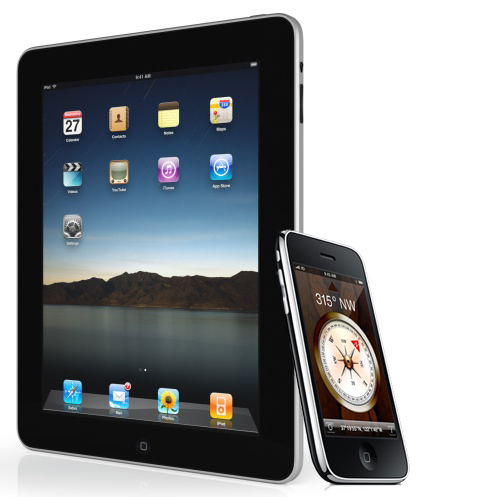
Internet browsing on mobile and tablet devices is becoming more and more popular. Latest figures published on NewMedia TrendWatch (research conducted by Ipsos Mori) show that 31% of adults in the UK own a smart phone (nearly half, at 14% of adults owning an iPhone), and 29% of UK adults owning a tablet (95% of tablet owners are classed as the ‘business elite’, with only 5% of standard UK population owning tablets currently). The news industry has quickly caught on to this technological revolution; both the Guardian and The Times have released ipad apps. However, figures show that the type of browsing which takes place on smartphones differs to that on the tablet:
Downloads of business and international news apps top the smartphone list (57%), followed by weather (51%) and games apps (38%), but for tablets, app downloads sway toward leisure with games (64%) and books (60%) and news apps arriving only third at 58% (even counting in business and financial news). Although tablets and smartphones have arrived on the scene fairly recently, Ipsos study shows around a third of the global business elite get their business news via smartphone, and about 16% via tablets. (Ipsos Mori, August 2011)
It seems that currently, the consumption of news is more prevalent on mobile devices than on tablets. Therefore, newspapers may have to find some way of making the functionality of their news apps more appropriate for smartphone users. I use the Guardian’s iPhone app myself, and although it’s easy to use, I still find I have to actively search for the news whilst I’m on it; it reads more like a news feed, and thus I don’t get the same pleasure you get from reading the newspaper; something that the iPad apps have worked hard to achieve. In fact, when using my phone for the news, I’d rather just look at the desktop sites of news organisations, rather than using their relative apps.
If a greater percentage of the population are acquiring their news via smartphones, the fact that smartphone apps aren’t yet as advanced as iPad apps may be an under sight by media professionals. We are far from reaching a stage where UK consumers own both a smartphone, and a tablet, the vast majority have one or the other; media platforms should be targeting both sets of consumers in equal measure. Smartphone news apps need to be developed to a point where acquiring the news is not only easy, but pleasurable too.
Very good points, especially the one about using the non-mobile version of popular news site.
As a member of the “other” half of the smartphone market (I.e., “us nerds that use Android”), I feel the perpetual focus on single-OS apps really does a disservice to the larger question of how stuff should be read on tiny devices. It’s ludicrous to ask users to download a separate piece of code just so that their experience is halfway decent when browsing on a mobile device. Simply making text flow in a way that doesn’t require horizontal scrolling will do more for that than any number of apps. Further, the latest versions of html/css give very powerful methods of making usable mobile websites to developers — without the need to maintain two codebases, write a single line of Objective C or worry about how other apps (I.e., Tweetdeck) will interact with your app.
Tl;dr – the focus on apps undermines actually creating usable mobile themes for news websites, to the detriment of everyone.
(This comment took me over 20 minutes to write on my mobile — something’s to be said about also improving mobile browsers…)